
Easy Communication – Toddler Activities
Toddlers are busy little learners! Every day they’re discovering new words, new experiences and new ways to tell you exactly what’s on their mind (even if that sometimes involves a meltdown!).
The good news is that you don’t need expensive toys or hours of preparation to support your child’s communication skills. Some of the best language learning happens during everyday play and routines.
Here are five simple activities you can start today to build your toddler’s communication, confidence and connection.
- Read Together Every Day
Reading is one of the most powerful ways to develop your toddler’s language.
Choose books with simple pictures, repetitive words and familiar objects. Instead of rushing through the story, pause to point at the pictures and ask simple questions like, “Where’s the dog?” or “What sound does the cow make?”
To make it even more engaging, use Key Word Sign (also known as baby sign language) alongside the important words. Signing words like dog, eat, sleep, more or finished gives your child another way to understand and remember new vocabulary.
The more your child sees, hears and experiences a word, the easier it is for them to learn it.
- Narrate Your Day
You don’t need a special lesson to teach language—just talk about what you’re doing.
As you make breakfast, get dressed or head to the shops, describe your actions:
“We’re cutting the apple.”
“Time to wash your hands.”
“Let’s put your shoes on.”
Using short, simple sentences helps toddlers understand language more easily.
Adding Key Word Sign to important words such as eat, drink, wash, car and home provides an extra visual cue that supports understanding while your child is learning to speak.
- Sing Songs with Actions
Songs are fantastic for building language because they combine rhythm, repetition and movement.
Songs like Twinkle Twinkle Little Star, Incy Wincy Spider and The Wheels on the Bus encourage children to join in, even before they can sing all the words.
Try adding Key Word Sign to some of the important words in the song. Your toddler may begin using the signs before they can say the words clearly, helping them communicate successfully while speech is still developing.
Not sure where to start? Check out this blog about the best signs to start with and why!
- Follow Your Child’s Lead During Play
Children learn best when they’re interested in what they’re doing.
Instead of directing the play, watch what captures your toddler’s attention and join them.
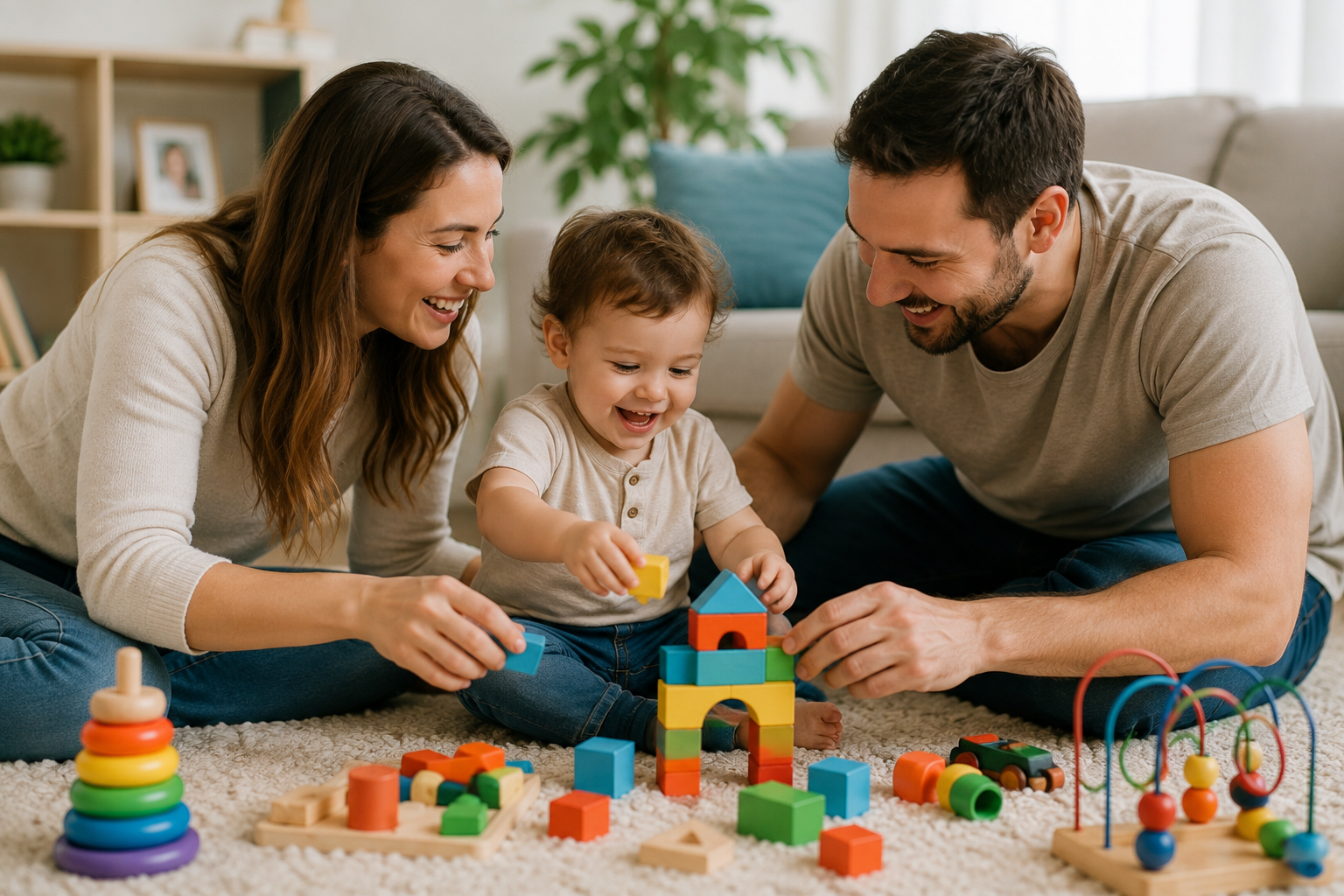
If they’re building with blocks, talk about up, down, big and fall.
If they’re playing with toy animals, help them by making the animal sounds (moo, baa, woof).
Using KWS (baby sign language) alongside these words keeps communication fun and interactive, while reinforcing new vocabulary through both speech and movement.
- Pause and Give Them Time to Respond
As parents, it’s natural to jump in and help, but sometimes the best thing we can do is wait.
After asking a question or offering a choice, pause for a few seconds.
Your child may respond with a word, a sound, a gesture, eye contact or a sign. All of these are meaningful forms of communication and deserve a positive response.
Giving toddlers time to process what they’ve heard helps build confidence and encourages them to take turns in conversation.
Every Moment is a Learning Opportunity
Supporting your toddler’s communication doesn’t require formal lessons. Reading books, singing songs, chatting throughout the day and playing together all help build strong language skills.
Adding Key Word Sign or baby sign language into these everyday moments gives children another way to understand and express themselves while spoken language develops. Many families find it reduces frustration, builds confidence and creates more enjoyable interactions.
The best part? You don’t have to be an expert. Start with a few everyday signs, use them consistently alongside your speech, and most importantly—have fun. Every conversation, smile and shared moment helps your child become a confident communicator.
Concerned about your child’s language development? Check out this blog on language milestones for children birth to 2 years old.
