
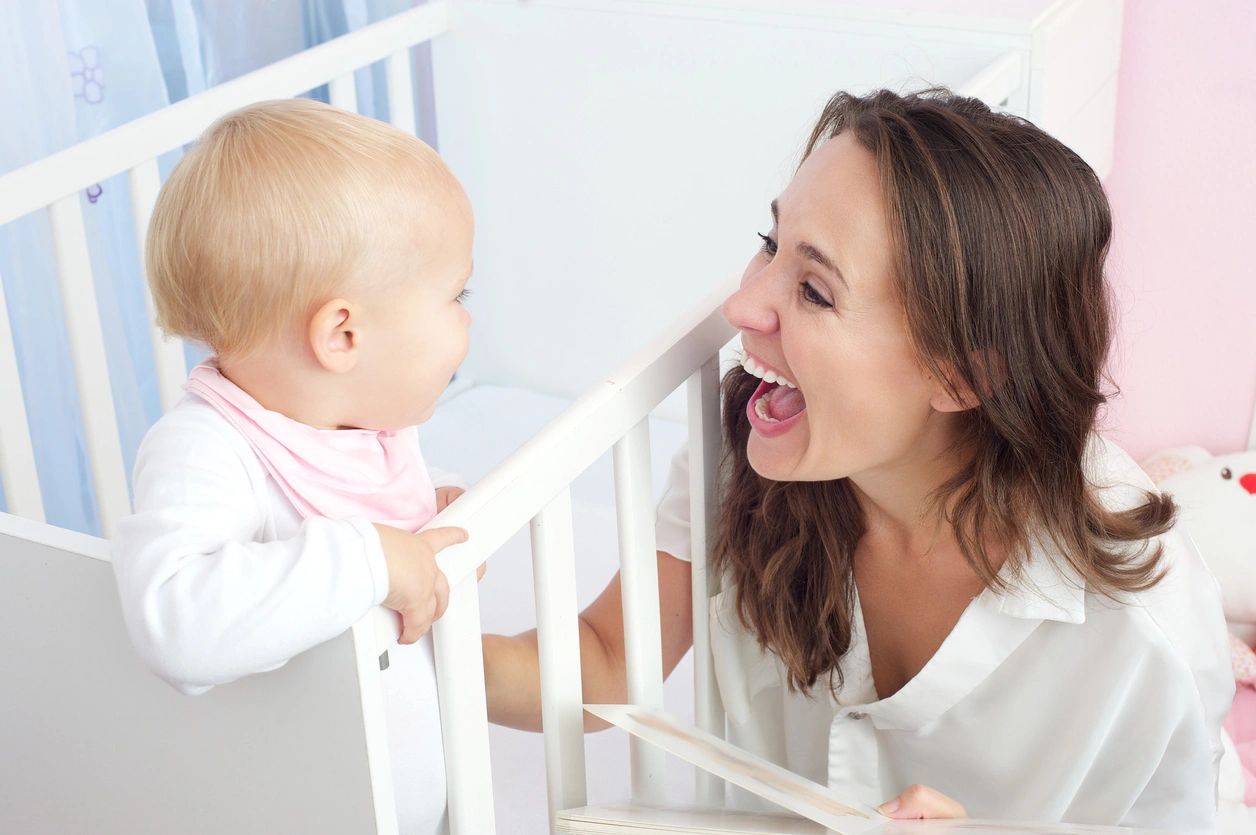
The first 2 years: Language milestones & baby sign language
The first two years of a child’s life are a whirlwind of growth and development, especially in the realm of language acquisition. This blog post takes you on a journey through the fascinating language milestones that mark the early years of childhood and some insight into how baby sign language fits in with the natural development of language. Please keep in mind that the ages are for general purposes. Though the order of language development will remain the same, the ages at which children achieve milestones will vary.
Cooing and Babbling (0-6 months):
In the initial months, babies communicate through cooing and babbling. From the sweet coos of contentment to the repetitive consonant-vowel combinations, infants are laying the groundwork for future language development. Parents often notice patterns and responses in these vocalizations, forming the basis of early communication. Fun fact: vowel sounds develop before consonant sounds (e.g. aaa, eee, ooo) and then consonant-vowel combinations (mama, dada, gaga).
Gestures and Joint Attention (6-12 months):
As babies approach their first birthday, they start to understand and use gestures such as pointing, waving, and reaching. This phase is crucial as it demonstrates the beginning of joint attention – the ability to focus on an object or activity together with someone else. It’s a precursor to meaningful communication and language comprehension. It’s also when the first signs will emerge if you are using baby signing! Baby sign language leverages this natural stage of language development.
First Words (12-18 months):
The magic begins around the first birthday when babies utter their first words. These initial words are often linked to significant people or objects in their immediate environment. Often a baby’s firsts true word will be “mama”, “dada” or even the family pet’s name! These first words differ from early consonant-vowel babbling in their intentionality and a baby’s understanding of labels. During this time, when babies understand a lot, but have limited vocabulary, learning baby sign is a great way to ease their frustration.
Understanding Complex Instructions (18-24 months):
Beyond just expressing themselves, toddlers in this age range demonstrate an improved ability to understand and follow simple instructions. Whether it’s putting toys away or pointing to familiar objects, their receptive language skills are expanding rapidly, paving the way for more advanced communication.
Emergence of Two-Word and Multi-Word Phrases (24 months):
Around the second birthday, children progress from single words to two-word combinations and even simple sentences. This phase is a testament to the growing complexity of their language skills. The ability to string words together enables them to communicate more nuanced ideas and express a wider range of thoughts and feelings.
The language milestones achieved in the first two years of childhood are nothing short of miraculous. From the melodic babbling of infancy to the emergence of meaningful phrases, each step represents a triumph in a child’s journey toward linguistic proficiency. As parents, caregivers, and observers, witnessing and nurturing these milestones is an awe-inspiring experience, laying the foundation for a lifetime of communication.
