
Top 5 Questions about Baby Sign Language for language development
Baby sign language is a powerful tool that allows infants to communicate their needs and wants before they can speak and enhance language development. As more families explore this enriching practice, it’s natural for questions to arise. In this blog post, we will delve into the five most common questions about baby sign language and provide comprehensive answers to help you navigate this exciting journey with confidence.
1. When should I start teaching my baby sign language?
Any time after 3 months is a great time to start. There is enough to do during those first 3 months, without having to worry about learning to sign. From 3 months on, that will allow you to develop the habit of signing and learn yourself, so that by around six to eight months, when your baby begins to develop motor skills and understand basic gestures, it will already be part of your home. At this stage, babies are starting to communicate non-verbally and are eager to engage. However, it’s never too late to introduce baby sign language. Even if your child is older, they can still benefit from the increased communication and bonding opportunities that baby sign language provides.
2. Will teaching my baby sign language delay their speech development?
No, teaching your baby sign language will not delay their speech and language development. In fact, studies have shown that babies who use sign language often have a higher verbal vocabulary and demonstrate stronger communication skills. Signing simply provides an additional means of expression, reinforcing language acquisition and fostering early communication. As your baby becomes more proficient in signing, they will naturally transition to spoken language as their oral skills develop.
3. How do I start teaching my baby sign language?
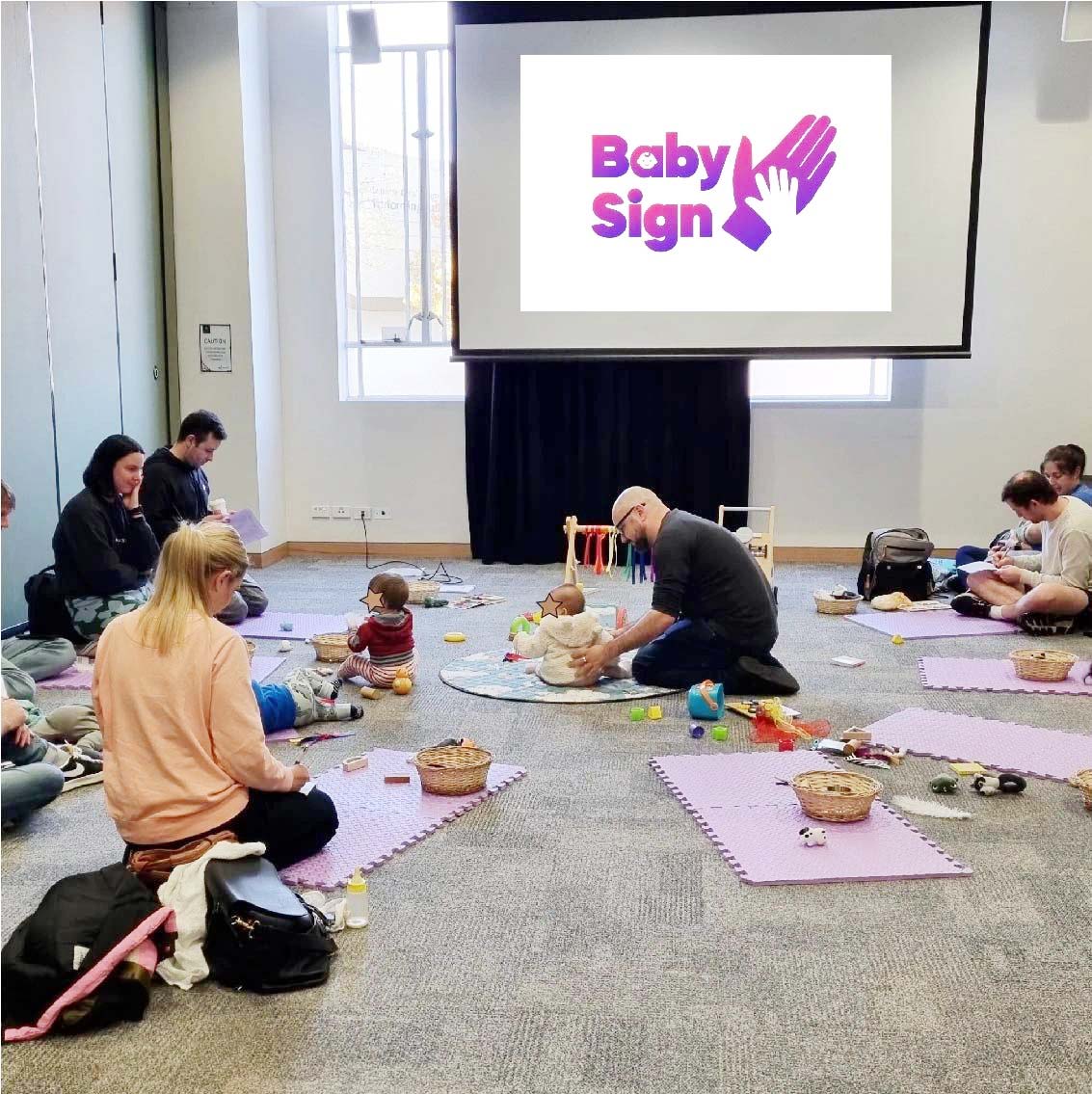
To start teaching your baby sign language, focus on simple and practical signs that are relevant to your daily life. Begin with basic signs such as “milk,” “more,” and “finished.” Signs that are freely available on the Baby Sign Instagram account. Use these signs consistently in context, accompanying them with spoken words. Incorporate signs into your daily routine, such as during feeding or playtime, to reinforce learning. You can also join a Baby Sign course online or in person to learn.
4. What if my baby doesn’t respond or show interest in signing?
Every baby develops at their own pace, and some may take longer to show an interest in signing. If your baby doesn’t respond immediately, don’t worry. Continue using signs consistently, giving them time to observe and absorb the gestures. Make signing fun by incorporating songs, games, and positive reinforcement. Remember that consistency is key, and eventually, your baby will begin to imitate the signs. Patience and persistence are vital in this process.
5. Will teaching my baby sign language confuse them or hinder their understanding of spoken language?
Absolutely not. Teaching your baby sign language will enhance their understanding of spoken language. Signing provides a visual representation of words, reinforcing their meaning and building connections in your baby’s brain. By associating signs with spoken words, you are helping them grasp the concept of language more effectively. Remember to always use signs in conjunction with verbal communication to ensure a comprehensive learning experience. As your baby becomes more proficient in signing, they will naturally transition to using spoken words alongside signs.
Baby sign language is a valuable tool for enhancing communication between parents and infants. By addressing the most common questions surrounding this practice, we hope to have provided you with clarity and confidence as you embark on your journey of teaching your baby sign language. Remember, each baby is unique, so embrace the process with patience and enjoy the profound bond that signing can foster.
